Showing posts with label sewing and culture. Show all posts

Friday, 14 October 2011

Toy Sewing Machines for Children -- Yea or Nay?


Friends, I have no children of my own, nor do I have anyone else's.  I do wonder, however, what it might be like to teach a small child to sew, how young is too young and, related to this, what kind of sewing machine to start a child on.

Many people opt to purchase a toy sewing machine, while others choose an adult machine, perhaps one with a hand crank, or a regular electric machine, to be used only under supervision.

Toy sewing machines have been around nearly as long as sewing machines.  They were usually powered by hand, and could produce a respectable chainstitch.


The evolution of the toy sewing machine mirrors that of adult machines, particularly in the way sewing machines became increasingly gendered (female), and marketed to specific demographic groups (college co-ed on the go, young homemaker, etc.).

Early toy sewing machines looked gender neutral and often were designed to look like miniature versions of adult machines.


Over time, hand cranks gave way to battery-operated, and occasionally even electric, foot pedals.  Of course, even when the look was strictly utilitarian, these were primarily intended as toys for girls.  But they were sturdy metal machines and they worked.


Just like adult sewing machines, with the introduction of plastic in the Sixties, toy sewing machines got flimsy and increasingly shoddy.  Reading some of the feedback for the toy machines for sale today on Amazon, one wonders why anyone bothers buying one.  They sound more like a punishment than a creative plaything.

To make matters worse, today's toy sewing machines all seem to come from the same cartoon kingdom of unicorns, fairy princesses, and Japanese anime.  Notice a trend here?


"Shake Lights and Music"???

What child over the age of two would want to sew on something like that -- or is this an accurate reflection of little girls' tastes?  Don't any girls prefer yellow...or, heaven forbid, blue?  And how about the little boys?

In your opinion, if a child -- and I'm not talking about an infant or toddler -- shows an interest in sewing, would she, or he, do better with a real sewing machine on which they could actually make something?  If electricity is an issue, why not a vintage hand-crank machine?  A decent vintage machine won't cost much more than a shoddy plastic toy, and is less likely to be tossed in the trash when it falls apart or when the child hurls it against the wall out of frustration.

In closing, readers, both with children and without, can a cheap toy sewing machine have value, in your opinion, or is it better that the child, under supervision, use a real sewing machine?

Did you have a toy sewing machine growing up?

Toy sewing machines for children -- yea or nay?

Photo courtesy of Craftastica.

Sunday, 10 April 2011

Sewing, Growing, and Flowing: The 8 Benefits of Making It Yourself


Readers, I always welcome the opportunity to take a break from actual sewing...to talk about sewing.  I find myself in a contemplative mood today and thought I'd reflect a bit on what sewing has given me, and perhaps you too.

Here, then, are my 8 Benefits of Making It Yourself:

1. Sewing is creative.  When you decide to sew yourself something instead of going to a store and buying what somebody else has designed, manufactured, and marketed, you're tapping into your own ingenuity and inventiveness.  Like so many of our abilities, once you tap into them, you realize how much more you're capable of than you ever thought possible.  Creativity begets creativity: you've sewn your own shirt, now let's see if you can sew your own vintage Fifties lace overlay cocktail dress (to make one example...).

2.  Sewing is educational.  There is so much to know about sewing and the learning never stops.  Fabrics, notions, techniques, fit -- the list is endless.  No matter what level sewer you are, there's always a new challenge ahead.  What can be more thrilling than that?


3. Sewing is self-actualizing.  I define self-actualization as becoming the person you really are, being true to yourself, and feeling authentic.  Doing something we love solely because we love it is self-affirming. You know you're on the right path when you're doing something that brings you joy.

4. Sewing gets you into your "flow."  Mihály Csíkszentmihályi, a Hungarian psychologist and author of the classic work Flow: The Psychology of Optimal Experience, argued that people are happiest when they are completely immersed in an activity that requires their full attention and skill.  (More about Csíkszentmihályi -- including the pronunciation of his name! -- here.)  Because sewing requires our full concentration, it puts us into our flow state, where we feel not only most alive, but also most relaxed, as our other concerns fade into the background.


5. Sewing is part of a craft tradition.  A century or two ago, most people were able to make most everything they needed.  The majority lived in the countryside and grew their own food.  Many built -- or participated in building -- their own home and furnishings.  Commercial industry as we think of it today was next to non-existent.  You might barter services with another, but basically you had to take care of your own needs.  Self-sufficiency is profoundly satisfying.  Today most of us no longer need to grow our own food or make our own clothes, and as a result we lack the knowledge -- passed down generation to generation -- to do so.  Learning how to sew reconnects us with these traditions.  And if you can do it with your own energy (by treadling or using a hand crank machine) you're even more self-sufficient!

6. Sewing is fantasy.  In the same way that it's no more difficult to paint a picture of a palace than a hovel, an extra foot of fabric can turn a house dress into an evening gown.  Sewing is a vehicle to explore not only who we are and what image we want to project into the world, but also who we like to pretend to be.  Children are able to access this ability with complete lack of self-consciousness: a blanket thrown over a table becomes a fort, an old sheet, a cape.  How many adults are still attuned to this capacity to dream and play?


7. Sewing is a window into history, sociology, and economics.  Sewing for ourselves challenges us to think about the role making clothes has had throughout history.  Sewing machines helped to emancipate women as it gave them a commercially marketable skill.  As sewing became an industry, sewers organized themselves into unions so that those in the textile trade could make a living wage and support their families.  Today, because of globalization and concentration of corporate power, we're moving in the opposite direction.  Sewing taps into a lot of academic disciplines and if we're inclined to study it, we can learn a lot about the world we inhabit.


8. Sewing is social.  Sewing used to be something most people did in isolation.  Unlike an activity like knitting, it's hard to sew in a group -- though obviously not impossible.  It requires sufficient space, organization (all those notions!), and portable machines (unless machines are provided).  But thanks to the Internet, we can connect with an unlimited number of people all over the world who share our passion.  One of the most exciting benefits of Male Pattern Boldness has been connecting (virtually and sometimes even in person) with readers from different cultures and traditions and learning their different perspectives on everything from fashion to sewing machine maintenance.


BONUS BENEFIT!!!

9. Sewing builds self-confidence.  This relates to many of the points already discussed.   When we are able to pursue something we love, we validate the importance of our own passion.   The same goes for being able to do something to take care of our own -- and/or our family's -- needs.  Feeling less dependent on the mall, on artificial trends, and cheap labor -- feeds into our self-confidence too.

Related to this is body confidence. When you learn how to fit yourself, when you become more intimately aware of your body and how to dress it in a flattering way, you feel more confident about the way you look.  What could be more dispiriting than feeling like you're the wrong size for the ready-to-wear clothing available to you, that somehow you are at fault?


Friends, this is what I've gained through sewing.  What have you gained?

I'd love to hear from you!

Wednesday, 16 March 2011

Whither the Secretary?


Friends, is anybody a secretary anymore?

In these days of internet, iPhones, Blackberries, etc., is there really any need for somebody to answer phones, take a letter, or make photocopies?

I don't know anybody who works as a secretary today, and the people I know who work in Corporate America tell me they're even firing the front office receptionists.  If your job description includes making coffee and taking dictation, good luck!

It seems the secretary has been relegated to the "naughty" Halloween costume aisle, alongside the "naughty" nurse and French maid.  Camp.

Like the American male, union, blue collar worker, the "girl secretary" was more than just an employee -- she was part of Twentieth-Century American culture.  She embodied one of the primary paths to women's economic and social emancipation.

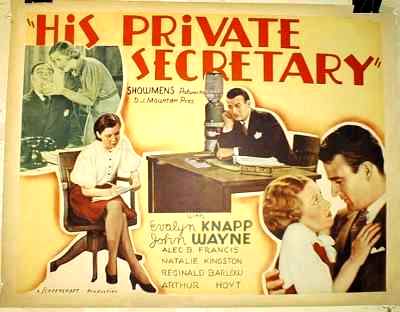
There were secretary magazines, secretary dresses, secretary fiction, and of course, secretary movies!


Ginger Rogers won an Academy Award in 1940 for her portrayal of secretary Kitty Foyle in a moving morality tale about the temptations to which working women were vulnerable.  (BTW, he won't leave his wife -- ever.)


Joan Crawford played an ambitious secretary in Grand Hotel, one of her most famous roles, repeated by Lana Turner in Week-end at the Waldorf.


Remember Edie Adams as Fred MacMurray's world-weary secretary in The Apartment?  Marvelous and heart-breaking!  (And he still won't leave his wife.)


The stereotype of secretary as temptress and potential home-wrecker was everywhere in vintage Hollywood movies and TV.  How many movies and sitcom episodes revolved around the husband hires beautiful new secretary and wife pitches a fit story?  Too many to count!

The no-nonsense, smarter-than-the-boss secretary was another beloved icon -- Eve Arden made an entire career out of playing these types of women.


On TV there was Ann Sothern...


...and Doris Day -- who in movies played career women with big jobs (remember Pillow Talk and Lover Come Back?), but on the small screen took a demotion.


And of course, Mary Tyler Moore.  Mary eventually rose through the ranks to become Executive Producer, but she still had to make the coffee.


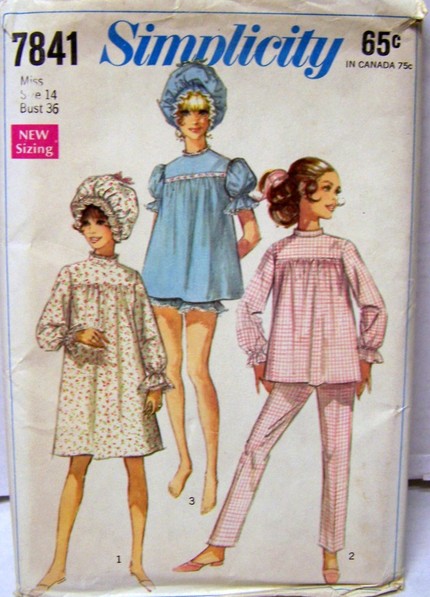
Secretary styles influenced women's wear for decades -- shirtwaists and modest frocks meant for the working woman.  Many were actually called secretary dresses on the pattern.


Ambitious secretaries might read Today's Secretary magazine, where she could learn important tips for improving her skills, pleasing her boss, and looking her prettiest.


She'd see ads like these.  Was she using the latest office equipment?


Today there's tremendous nostalgia for secretary style and there are actually entire sewing blogs dedicated to cultivating the vintage secretary look!  There's much less nostalgia for the job itself however.


In closing friends, were you or someone you love ever a secretary?  (I was, in the Eighties, for the president of a university press.)

How do you feel about secretaries -- was the job a convenient way to keep women with professional aspirations in their place, or was it a true pathway for women into the professional world?  (Or both?)

Who are your favorite secretaries from movies and TV?  Were you ever influenced by them, either in your style or your professional ambitions?

I want to hear from you -- but don't forget to take lunch, hon!

Tuesday, 23 November 2010

Trend Watching: the Future of Home Sewing


Readers, when you sew all day and write a sewing blog, it's easy to lose perspective. 

Before I learned how to sew, I didn't know anybody who even owned a sewing machine.  Today, I shun anyone who can't use the word presser foot in a sentence, and if they don't know what a feed dog is, I'm not interested.  I think it's totally normal to sew bras, girdles, and crinolines, moreover, and snicker at the men who don't.  I just assume everyone sews.


Still, from time to time I try to step back and look at the big picture.  Where are we today, with regard to home sewing? Are we losing more sewists than we're gaining?  Are pattern companies expanding or shrinking?  Are we still in a period of contraction -- fewer stores, narrower options, diminished quality  -- or is there new energy, new interest, and new innovations? 

I love to read about trends, and a really fun site to visit is trendwatching.com, which reports on trends around the world, primarily for industry.  They issue monthly reports about what's going on, particularly in 'emerging' markets, and it can be inspiring to those of us confronted daily with signs of decline to know that in other parts of the world, business is booming and people are energized. (These are reports on current trends, not predictions for the future, btw.)


Friends, today I have an assignment for you. Consider yourselves field reporters-for-a-day.  What are the trends you see in your neck of the woods?  Are people you know excited about sewing, or could they not care less?  Where is the growth, and where is the decline?  Let's hear from all the continents!

If you hang around sites like Pattern Review, you'd think the whole world was in a tizzy about overpriced Featherweights, and unbalanced thread tension was a bigger problem than, say, nuclear disarmament.  I'm not sure that's true.

So just how big is home sewing?

If you wanted to sink some money into it, where would you put it?  What would your advice be to someone who wanted to invest in it?


Trend watchers of the world, we need to hear from you!  (And please tell us where you're writing from.)

Thursday, 21 October 2010

Spreading the home-sewing meme


Friends, do you ever feel like you spend a disproportionate amount of your day talking/thinking/writing about sewing?

Do you ever catch friends or colleagues, when you mention sewing, rolling their eyes, glancing at their watches, and suddenly having to catch the 5:15 train -- and they drive to work?  Do you yourself retreat daily to the comforting, marshmallow, everybody-sews-here worlds of Pattern Review, BurdaStyle, and Male Pattern Boldness?

Between my 30th high school reunion earlier this month, recent family get togethers (my brother's wedding is three weeks away), and my busy work-the-room lifestyle, I find myself talking about sewing all the time.  I have told the story of how I learned to sew (which you can read here) so many times, I can recite it in my sleep.

Sometimes I feel like the President of the Treadle Association of America or the International Mens Sewing Alliance. 

But do you think I'm converting anybody?  I wonder.


Wise readers, what's the best way to spread the home-sewing meme (a meme is essentially a message), in your opinion?  How do we grow home sewing?

Yesterday I met up with the friend of an online sewing friend, a lovely young woman from France, for my third visit to the jaw-droppingly wacky "Japan Fashion Now" exhibit at FIT and a stroll through Chelsea with the chihuahuas.  We talked a lot about sewing machines, sewing, blogging, fashion, you name it.  I had such a lovely time and it was a real spirit-lifter, but I didn't get the sense that Anne was going to start sewing any time soon.

For one thing, she has our mutual sewing friend making a lot of her clothes.  This must stop!


I know many of you have been sewing for decades and have lived through the dramatic contraction of the home sewing industry: local fabric stores closing, fewer independent sewing machine manufacturers and vendors, an increased focus on quilting among the vendors that remain, fewer patterns for sale, and so on.  It's admittedly depressing.

Yet at the same time we have all these sewing websites and communities, countless online fabric and notion resources, sites like eBay and Etsy where you can purchase old patterns, books, and vintage sewing machines, and countless sewing blogs.  Nobody with Internet access needs sew in isolation!


Could it be that home sewing has bottomed out and is growing once again?  Has a generation raised in Gap clothes soured on mass-produced fashion?

How can we successfully spread the home-sewing meme?  What do you think would help convert non-sewers into passionate sew-zombies like us? (What turned you into one?)

Have you ever successfully turned someone on to sewing?  Did you actually have to give them a machine to get them started?

World conquest may not be within our reach -- not right away.  But a little benign evangelism never hurt.  It's in our collective interest to take action.

Let's think strategically.

Ideas, people, ideas!