 |
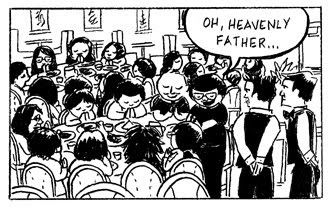
| Random Chew page of the week (from Chew #17) |
Showing posts with label comic books. Show all posts
Showing posts with label comic books. Show all posts
Tuesday, 15 November 2011

Tuesday, 8 November 2011

Tuesday, 1 November 2011

Tuesday, 25 October 2011

Wednesday, 19 October 2011
BBC's Luther may be as close as we can get to that TV version of Gotham Central some of us GC readers always wanted to see

 |
| (Photo source: Luther Caps) |
 |
| (Photo source: Luther Caps) |


 |
| (Photo source: Luther Caps) |
 |
| (Photo source: Luther Caps) |
Tuesday, 18 October 2011

Tuesday, 11 October 2011

Tuesday, 4 October 2011
Chewsday

As an Asian Pacific American reader who's enjoyed non-superhero comics way more than superhero comics because the superhero genre is often too right-wing, puerile and "Yay, white people!"-ish for my tastes (and as Patton Oswalt once noted in a 2003 interview, "Superheroes are so much about despair. Wanting someone to come out of the sky and fix things for me."), Chew is the kind of non-superhero comic I've always wanted to see: a crime title with an APA protagonist. But instead of being Captain Squarejaw or Super Asian Man, Agent Tony Chu is a much more relatable and down-to-earth figure: a good-humored detective (and perhaps not-so-great parent, which is indicated by the recent surprising revelation that he has an estranged teenage daughter) who's sometimes disgusted with what his extraordinary ability subjects him to.
An agent of the Special Crimes Division of the FDA (yes, that FDA), Chu is a cibopath, which means he gets psychic impressions from any item he eats, even when the item's not intended for consumption. If the item is crime scene evidence like a murder victim's severed limb, Chu will bite into it for the sake of the case, even though it kind of gives him the heebie-jeebies. We'd get the heebie-jeebies too if we were in Chu's shoes, which makes him an easily relatable hero.
It might sound like Chew is an overly dour series about a guy who finds his power to be a burden a la Sam Raimi's Spider-Man movies or the execrably written TV series Heroes, but Chew is far from dour. It's funny as hell, and its rich writing, clever visuals and choice of an Asian American protagonist who's neither stereotypical nor one-dimensional are always worth trumpeting, whether it's in this series of weekly posts that I'm kicking off today or in a recent tweet of mine that ended up becoming one of my most popular tweets because Guillory retweeted it.


Wednesday, 23 February 2011
Dwayne McDuffie (1962-2011)

"It showed that there could be actual black people in comics," wrote comics reviewer David Brothers in a Black History Month tribute to McDuffie and Milestone that he posted a couple of weeks before McDuffie's death yesterday. "The company was full of people who looked, acted, and talked like people I knew. This is a big deal, believe it or not."
It was also a big deal for Asian American readers like myself who grew up in a multiracial world that wasn't being reflected enough in superhero comics (sadly, it still isn't) and were looking for comics that featured Asian characters who were raised in America like we were and weren't foreigners in corny dragon-themed or martial arts-themed costumes that were the Asian equivalent of the "headband and yellow disco shirt" that The Boondocks once joked about in regards to Luke Cage's costume. Milestone responded to the lack of Asian American characters in superhero comics by creating the immortal hero Xombi and Third Rail, a Korean member of the Blood Syndicate, a superhero team comprised of gangbangers who were mutated by radioactive tear gas during a police crackdown on gangs. Latino and gay characters also inhabited the Milestone universe.


I got to meet McDuffie at a 2009 San Diego Comic-Con panel about diversity in comics where one of the projects that were discussed was Secret Identities: The Asian American Superhero Anthology, a graphic novel that followed in Milestone's footsteps and featured a short story I created, "Sampler." As a teen, I enjoyed Static, Blood Syndicate and Icon, so I was thrilled to meet McDuffie, who praised our GN and called it long-overdue.

I also enjoyed McDuffie's work on Justice League Unlimited. He came up with the premise for "The Great Brain Robbery," an amusing episode in which The Flash and Lex Luthor switched bodies and Michael Rosenbaum, who played Lex on Smallville when he wasn't providing the voice of The Flash on JLU, got to voice both his live-action and animated alter egos. McDuffie also crafted the show's Cadmus arc, which gave ample screen time to characters who were not so well-known to viewers who were unfamiliar with most of the DC books--like The Question, Green Arrow and The Huntress--and followed those heroes as they uncovered a government conspiracy to dismantle the Justice League due to fears that the team would become as corrupt as its parallel universe counterpart, the fascist Justice Lords. A high point of the series, the Cadmus arc dared to question (no pun intended) and critique the superhero genre's right-wing tendencies.

McDuffie may be gone, but his fight to bring more diversity to comics rages on, whether it's in the form of Secret Identities or David Brothers' writing.
"You don't even see that these days," said Brothers in a tweet referring to how the diversity in the Milestone titles ventured to include not just black characters. "They weren't black comics. They were comics."
Thursday, 30 December 2010
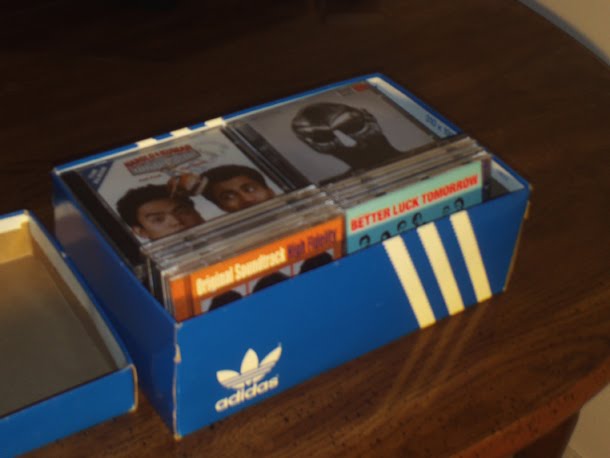
This is literally my "Rock Box"

The time slots for "Rock Box" on AFOS are 4-6am, 9-11am and 3-5pm on Mondays and 5-7am, 9-11am and 3-5pm on Fridays.
Friday, 20 August 2010
Scott Pilgrim's precious little logo
 |
| (Photo source: "The 30 Best IRL Ramona Flowers") |
It's unfortunate because Scott Pilgrim, a perfect marriage of source material and director, is in no way a two-hour piece of fecal matter like most of those other flops, due to Wright's respect for--and enhancement of--Bryan Lee O'Malley's material and inventive gags like what has to be the most amusing cover of the Universal logo music to ever open a Universal picture.
 O'Malley's creation is partly influenced by 8-bit video games, so legendary Radiohead producer Nigel Godrich redid Jerry Goldsmith's Universal fanfare in 8-bit form. It accompanies an NES-style version of the Universal globe that's as charmingly pixelly as all those title screen graphics that would open NES games I used to play as a kid. The enthusiastic audience that was treated to an advance Scott Pilgrim screening at Comic-Con went so wild over this opening gag that a Wired blogger couldn't even hear the drowned-out 8-bit logo music and wondered in his post if the opening piece was the Legend of Zelda theme. The redone fanfare also opens Godrich's digital-only Scott Pilgrim score album.
Another studio logo music parody I like is the J.B.'s-style cover of the 20th Century Fox fanfare at the start of White Men Can't Jump (one of many instances where a Fox release spoofed the fanfare--another example was Alien³). Alfred Newman never sounded so funky.
Thursday, 27 May 2010
AFOS: "The Android's Dungeon" playlist

Airing next Wednesday at 10am and 3pm on A Fistful of Soundtracks is the Fistful of Soundtracks: The Series episode "The Android's Dungeon" (WEB80) from July 17-23, 2006.
The WEB80 playlist consists of selections from scores to film adaptations of comic books or graphic novels. Several of these films actually aren't from the superhero genre, particularly Ghost World and American Splendor. Even though my print comics writing debut was in a superhero graphic novel, and I was entertained by Iron Man and its sequel (which I've jokingly referred to on Twitter as Iron 2 Man because of its weirdly arranged logo in the TV spots), I'm not really much of a fan of the superhero genre. As Matt Zoller Seitz recently noted in a Salon piece that's a great read despite Seitz's tendency to refer to superhero flicks as "comic book films" (last time I checked, comics aren't just about superheroes anymore), the superhero genre has gotten too clichéd. It's also too white right now. A few days after I posted that fans of DC's short-lived All-New Atom are worried that the company will kill off the series' surprisingly non-stereotypical Asian hero Ryan Choi, what does DC do? They bump him off, of course. Screw DC (the non-Vertigo-and-WildStorm part of the company, that is, because Vertigo and WildStorm are the only DC publishing divisions I give a shit about these days).

1. Danny Elfman, "The Batman Theme," Batman: Original Motion Picture Score, Warner Bros.
2. Shirley Walker, "Main Title," Batman: Mask of the Phantasm, Reprise
3. Hans Zimmer and James Newton Howard, "Molossus," Batman Begins, Warner Sunset/Warner Home Video
4. Eytan Mirsky, "American Splendor," Everyone's Having Fun Tonight!, M-Squared
5. David Kitay, "Theme from Ghost World," Ghost World, Shanachie
6. Danny Elfman, "Spider-Man 2 Main Title," Spider-Man 2: Original Motion Picture Score, Columbia/Sony Music Soundtrax
7. John Ottman, "Main Titles," Superman Returns, Warner Sunset/Rhino
8. Thomas Newman, "Rock Island, 1931," Road to Perdition, Decca/UMG Soundtracks
9. Marco Beltrami, "Main Title," Hellboy, Varèse Sarabande
10. Robert Rodriguez, "Sin City End Titles," Sin City, Varèse Sarabande
11. Ennio Morricone featuring Christy, "Deep Down" (from Danger: Diabolik), Canto Morricone: The Ennio Morricone Songbook, Vol. 1, Bear Family
12. Dario Marianelli, "The Dominoes Fall," V for Vendetta, Astralwerks/EMI
13. John Ottman, "Suite from X2," X2, Superb/Trauma
14. James Horner, "Rocketeer to the Rescue/End Titles," The Rocketeer, Hollywood
Reruns of AFOS: The Series air Wednesdays at 10am and 3pm. To listen to the station during either of those time slots or right now, press the play icon on the blue widget below the "About me" mini-bio on this blog. I wish I included Oldboy or Akira in that 2006 playlist. Oh well.
Saturday, 1 May 2010
My starting six for Asian Pacific American comic books

Last year, music critic/blogger Oliver Wang invited his readers to post lists of six films that they think would best serve as an intro to Asian American cinema if someone asked, "What the hell is Asian American cinema? School me." Chan Is Missing, a Wayne Wang indie comedy that broke new ground in 1982 for its multilayered portrayal of the frequently stereotyped Chinese American community, showed up on several readers' lists.
It took a long time for the APA-dominated comics industry to catch up to Chan Is Missing and other equally groundbreaking '80s and early '90s indie films by APA directors. When I was a teen, I frequently thought, "Why aren't all these Asian creators doing comics about themselves or rather, about us? Okay, there's Xombi by a pair of non-Asians over at Milestone Media. But that's it? (NOTE: I didn't know Lynda Barry was one-quarter Filipina at the time.) Are these Asian guys whitewashed or something?"
The lack of APA protagonists was one of many reasons why I lost interest in comics and didn't become a regular reader again until the mid-2000s (mainly because of the strong writing in titles like Y: The Last Man and Gotham Central). It was a great time to come back to comics because that part of the decade saw several APA creators unleashing graphic novels with richly crafted APA characters that were on a par with Chan Is Missing.
I'm looking forward to seeing more APA comics or graphic novels. I was even involved in one of them (Secret Identities: The Asian American Superhero Anthology). Whether they're semi-autobiographical works that examine APA identity issues or post-racial escapist fare that doesn't address any of those issues at all (but it doesn't matter because look, yo, it's an APA brother as the hero!), here, in alphabetical order, are six essential APA comics or graphic novels, just in time for APA Heritage Month.

1. The All-New Atom (writer: Gail Simone/illustrators: various, 2006-08)
DC's most recent revival of their microscopic superhero only lasted 25 issues, but its wisecracking lead, Ray Palmer's Hong Kong-born protege and successor Ryan Choi, still suits up as the Atom in other DC titles and even the Batman: The Brave and the Bold animated series (some fans of the Choi incarnation fear that after these post-cancellation appearances, the character, whose series tanked sales-wise, might get killed off someday). For this offbeat series, which was partially created by Grant Morrison and collected in four trade paperback volumes, Birds of Prey and Wonder Woman writer Simone set up a nifty and inventive premise that raises the question "Do superheroes ever think about the destruction they leave in their wake?" The shrinking technology that Professor Palmer made use of as the Atom has left some nasty side effects on the physics of his hometown Ivy Town and turned it into a Sunnydale-like hotbed of paranormal activity. After his professor mentor mysteriously goes AWOL, Choi defies the wishes of his Hardass Asian Father and assumes the Atom mantle to protect Ivy Town from monsters, size-changing serial killers and a microscopic extraterrestrial warrior race that lives inside Choi's dog Copernicus. Oh yeah, and there's a 30-foot-tall naked red-haired chick (if the My Life in Miniature arc ever becomes a movie, naked Giganta ought to be played by Christina Hendricks--and somewhere, a nerd's pants explode).

2. American Born Chinese (writer/illustrator: Gene Luen Yang, 2006)
Colored superbly by artist Lark Pien, Yang's absorbing third novel centers on a whitewashed Chinese junior high-schooler who's filled with enough self-hatred to fuel an Esther Ku routine, and it ties the kid's struggles beautifully to the Chinese legend of the impish and heroic Monkey King. As a kid who drew his own comics, Yang was prone to some of the same kinds of whitewashed behavior that his novel depicts. He would doodle bucktoothed caricatures of his own people, without realizing they're as offensive as the Asian-bashing cartoons he would later find objectionable as a grown-up (he named the school that's a source of torment for the title character after one of these racist cartoonists, Pat Oliphant). American Born Chinese's bucktoothed Cousin Chin-Kee character was a way for the Bay Area native to exorcise that personal demon (much like Lynda Barry, whom I'll get to later). The confessional feel of American Born Chinese is quite Catholic--Yang himself is a devout Catholic--and the candor with which he tackles self-hatred and identity recalls the earlier and more personal works of another guilt-ridden Catholic, Martin Scorsese.

3. Chew (writer: John Layman/illustrator: Rob Guillory, 2009-present)
Layman and Guillory's clever, funny and sometimes gross Image series imagines a world rocked by a Y: The Last Man-like bird flu catastrophe (was Layman inspired by the footage of struggling Vietnamese chicken farmers in Laura Ling's 2006 bird flu piece for Current TV?). In the Chew-niverse, Poultry Prohibition is in effect, the poultry black market is as dangerous and murderous as the drug trade, and the FDA, suddenly the most powerful government agency in America, starts a Special Crimes division and turns to "cibopath" Tony Chu to bust all the crazies who have emerged since the bird flu. Chu's cibopathy allows him to see the history of any item he eats, from where it originated to who prepared it. So if Chu were the primary on the case of the Barbara Bel Geddes Alfred Hitchcock Presents character who killed her husband with a frozen leg of lamb and got rid of her weapon by serving it to the cops for dinner, Miss Ellie wouldn't have stood a chance. Guillory modeled Chew's often repulsed but brave detective hero after Lost cast member Ken Leung, whose ease with shifting back and forth between humor and seriousness would make him an ideal screen portrayer of Chu (although I have a feeling Leung, who had a bit part in X-Men: The Last Stand as a porcupine man who must be a nightmare in the sack for the ladies, might want a break from playing guys with weird powers). Here's a reason to admire Chew's white scriptwriter: he reportedly refuses to sign off on a screen adaptation if an APA actor isn't cast as his creation. In whitewash-crazy Hollywood (The Last Airbender, Mickey Rourke's possible Genghis Khan biopic), I wouldn't be surprised if Layman ends up in one hell of a fight. Heads up, Hollywood: Chu-style biting might be involved.

4. Eagle: The Making of an Asian-American President (writer/illustrator: Kaiji Kawaguchi, 1997-2001)
24 foretold a black president. The West Wing's final season envisioned a Latino one. Kawaguchi's soapy but riveting political manga imagined a Japanese American prez--several years before either of those shows introduced their fictional chief executives of color. Kenneth Yamaoka, the New York senator whose campaign to become the Democratic presidential candidate is the focus of Eagle, bears a few similarities to President Obama. Both are charismatic, self-deprecating former lawyers of biracial heritage who hail from Hawaii and have to put up with racist outrage over their ascension in the political arena. The major difference between Yamaoka and our current president is that Obama doesn't have an adopted daughter and an illegitimate son who fall in love with each other. The somewhat disgusting incest subplot is the weak link in an otherwise thoughtful and intriguing exploration of political strategizing and racism on the campaign trail. (The five-volume Eagle is currently out-of-print, but I unearthed the first two volumes at a local library and absorbed both chunky books in one sitting. Yamaoka's campaign manager Arthur McCoy resembles Human Target star Chi McBride so much that I couldn't help reading aloud some of McCoy's dialogue to myself in a McBride-style rasp.)

5. One Hundred Demons (writer/illustrator: Lynda Barry, 2002)
For her first autobiographical work, which she called an "autobifictionalography," the creator of the alt-weekly fixture Ernie Pook's Comeek took a cue from a Zen monk who would exorcise his personal demons by painting them, and she revisited her own demons from her past. They range from frustration over the travesty that was the 2000 Florida presidential vote recount to regret over choosing lousy boyfriends (the nameless pony-tailed boyfriend in the "Head Lice and My Worst Boyfriend" chapter is based on her ex Ira Glass). Many of the novel's most enjoyable or poignant sections involve Barry's days as a gawky, fatherless misfit who bonded with her fun-loving Filipino grandma and was subjected to nonstop verbal abuse from her far less compassionate half-Filipino mother. One Hundred Demons is an interesting precursor to American Born Chinese, and like Yang's novel, it's upfront about the painful side of growing up Asian in America and nostalgic for the delightful aspects of it, such as Barry's Pinoy relatives' impromptu dance parties (the American Born Chinese equivalent is Transformers toy battles with other Asian kids). Barry's rubber-limbed drawing style is especially charming during the chapter about dancing, which finds Barry paying tribute to the "keepers of the groove" and "the babies and the grandmas who hang on to it and help us remember when we forget that any kind of dancing is better than no dancing at all."

6. Shortcomings (writer/illustrator: Adrian Tomine, 2007)
I knew Shortcomings was terrific right when it began with a swipe at overly earnest APA indie films ("Why does everything have to be some big 'statement' about race? Don't any of these people just want to make a movie that's good?"). On the subject of Shortcomings, which collects a three-issue arc from his series Optic Nerve, Tomine told The Economist's Intelligent Life, "It became a challenge to create something honest. I didn't want to make a book that said 'it's cool to be Asian,' or 'racism is bad.'" That honesty--best exemplified by Tomine's refusal to make his New York-hating theater manager protagonist Ben Tanaka a completely likable romantic hero who's always in the right and who triumphs in the end--is why Shortcomings isn't just one of the best APA-made graphic novels but also one of the aughts decade's best novels, period. Tomine's downbeat (but not overly dour) and elegantly illustrated novel has often been compared to Annie Hall (which is also about a heartbroken misanthrope who has to brave a city he can't stand in order to attempt to patch things up with the one that got away), but the way Ben sabotages his relationship with his activist girlfriend Miko to indulge a fetish for white chicks and then amusingly suffers the consequences is more Larry David than Woody Allen. While many readers might detest Ben, it'd be hard to find anything to dislike about his mischievous and much less sullen Korean lesbian best friend Alice, whose acerbic exchanges with Ben are among the novel's highlights ("All Asians might look the same to you, but my family would spot your Japanese ass a mile away").
Wednesday, 10 March 2010
Some factoids about The Palace: Theatre of Crud, Chapter 5--for the one or two readers who actually give a shit

I modeled Chapter 5 of Theatre of Crud after an actual panel from Watchmen (located on page 18 of the 1986 miniseries' fourth chapter, "Watchmaker," a.k.a. the Dr. Manhattan flashback issue, to be exact).

However, I drew the feature film version of Laurie Jupiter instead of the original Dave Gibbons interpretation of Laurie because the Malin Akerman version is far more attractive and has a better-looking crimefighting outfit. It really brings out her ass.
There are only two things the Watchmen feature film did better than the original comic: the climax, which doesn't include a ridiculous-looking squid, and Silk Spectre II's fashions. The outfits worn by Silky in the comic would have been constantly mocked by the alternate Earth's equivalent of Go Fug Yourself.

"This pantsuit with the front pockets. Is she supposed to be a cobbler? Does she have an awl in there?," snarked Carr D'Angelo in a Comic Book Resources recap of the miniseries. "I do love Gibbons as an artist but he really doesn't draw sexy women."
Just like how Silky's fugly pantsuit didn't make it into the 2009 movie, there were tons of gag ideas I wrote down for Theatre of Crud but ended up not drawing. They included "Rich Little impersonators," "Steampunk Kanye" and "A Teabagger gets teabagged by a teabagger, or as Studio Ghibli calls it, Pom Poko." I drew a strip in which Joe, who's wielding a Filipino knife, kidnaps Rush Limbaugh, but I wasn't satisfied with it.
Monday, 1 March 2010
Metric is streaming a sneak preview of their Scott Pilgrim music

Universal's Scott Pilgrim vs. the World, the adaptation of Bryan Lee O'Malley's popular comics by one of my favorite newer filmmakers, Shaun of the Dead director Edgar Wright, doesn't come out until August. But you can get a sneak peek of the star-studded soundtrack, thanks to the Toronto band Metric, which posted on Facebook this weekend one of several original songs they contributed to Pilgrim.

Metric provided the sounds for The Clash at Demonhead, one of the title bassist hero's fictional musical rivals, while Beck will represent Scott's own band Sex Bob-omb, and Broken Social Scene will represent another fictional band, Crash and the Boys.
Like everything else I've heard from Metric, "Black Sheep" sounds terrific. Hit the "Become a Fan" button on their Facebook page to hear "Black Sheep."
[Via Wright and Robot 6]
Wednesday, 6 January 2010
Mighty love: A look back at Ralph Bakshi's adventurous and long-lost Terrytoons reboot, now on DVD

This is a revised version of a June 5, 2009 post--updated to include mentions of the Mighty Mouse: The New Adventures complete series DVD that came out yesterday.
I never thought I'd see the day. Ralph Bakshi and John Kricfalusi's hilarious late '80s Mighty Mouse: The New Adventures reboot of Terrytoons' opera-singing rodent superhero finally got an extras-filled DVD release from CBS/Paramount, delighting animation fans and '80s kids like me who, back in '87 or '88, thought, "There's gotta be a better cartoon than Transformers, G.I. Joe and all the other lamer ones starring toys," and then caught Mighty Mouse: TNA one Saturday morning and said, "Hey man, we just found it."

The amusingly over-the-top and off-kilter Bakshi Animation fanfare that opened every 11-minute Mighty Mouse: TNA story signaled this was not another saccharine and sanctimonious cartoon kingdom like the ones inhabited by the Care Bears, Teddy Ruxpin, My Little Pony and the Little Clowns of Happytown. The Bakshi/John K. Mighty Mouse brought back some characters from the Terrytoons shorts (Pearl Pureheart, a less prominent Oil Can Harry) and introduced several new ones, like MM's lonely orphan buddy Scrappy Mouse, a bald villain named Petey Pate, the Batman spoof Bat-Bat--a precursor to both the Tick and Die Fledermaus--and the Cow, Bat-Bat's bovine nemesis.

The show also ditched the obnoxious opera singing from the old shorts and gave MM a secret identity for the first time. When MM wasn't busy rescuing Pearl, Scrappy or the other citizens of Mouseville, he disguised himself as a plain-voiced construction worker named Mike the Mouse, a new conceit that actually made MM a more relatable character. In the show's much more anarchic and absurdist second season, the writers apparently lost interest in the Mike persona and had MM appear as his caped self all the time, even when he got married to Pearl at a ceremony that was attended by all the other Terrytoons characters.
 Nineties cartoons like Tiny Toon Adventures and Animaniacs jumpstarted the whole meta-toon trend of poking fun at rival cartoons. But Mighty Mouse: TNA actually went meta years before--and with funnier and wilder results--in the classic "Don't Touch That Dial" episode, which launched an unprecedented attack on cookie-cutter '80s cartoons and viewers' short attention spans. The show's writers and animators admired the '40s and '50s Looney Tunes shorts (the Termite Terrace crew was in their comedic prime during those decades, but several of their shorts were also pretty racist-ass, to borrow a word from a recent tweet by Geo of Blue Scholars about Looney Tunes marathons). Throughout the series run, the Mighty Mouse: TNA staff succeeded in recapturing the irreverent spirit of those '40s and '50s cartoons, and in "Don't Touch That Dial" and an earlier ep, "Mighty's Benefit Plan," they couldn't resist expressing their hatred for the shabby state of mainstream animation at the time.
In the first-season ep "Mighty's Benefit Plan," the writers skewered one particular '80s cartoon, NBC's Alvin and the Chipmunks revival. They reimagined the Chipmunks as "Elwy and the Tree Weasels" (the band's biggest hit was called "Twitch and Writhe"), and in a series of gags they somehow Jedi mind-tricked CBS censors into ignoring, they turned David Seville into a disgusting-looking, Cheerios-craving pseudo-pedophile--an eerie foretelling of creepy teen pop Svengalis like Lou Pearlman and Joe Simpson.
 |
| Mr. E (Photo source: Jeffrey Pidgeon) |
Not everything in Mighty Mouse: TNA worked. Scrappy, voiced by the late Dana Hill, the Patrick Troughton of Audrey Griswolds, was an annoying audience surrogate who became even more annoying when a cost-cutting Bakshi would string together clips of old Terrytoons shorts and have an offscreen Scrappy snark at the footage for the entire 11-minute segment. Mighty Mouse invented MST3King about a year before MST3K did! (When he was asked in a 1988 interview about the 11-minute montages of old Terrytoons clips, John K. said, "Why waste money on those things? Nobody's going to watch them anyway.") Though these segments weren't very funny--and listening to Scrappy's voice for 11 minutes straight is like being treated to a concerto by the Nails on Chalkboards Philharmonic Orchestra--they showed how much of an improvement the Bakshi/John K. reboot was over the original MM cartoons, which were rather sucky. No wonder the show's writers and animators turned to Looney Tunes instead of Terrytoons for comedic inspiration.
 It's a shame this little-seen show has been remembered mostly for the uproar caused by the religious right--they thought they saw MM snort coke from a flower--and not often enough for moments like the ep that pitted MM against a giant, evil and nameless parade balloon that was clearly Pee-wee Herman (a funny reference to another CBS Saturday morning show at the time), the Elwy show and "Don't Touch That Dial," the most entertaining 11 minutes of small-screen animation from the '80s. Though it lasted only two seasons, Mighty Mouse: TNA was popular enough to spawn an early '90s Marvel comic that brought Bat-Bat, his sidekick Tick the Bug Wonder, the Cow and the show's other new characters to the funny pages.
 For a while, a Mighty Mouse: TNA DVD seemed unlikely because according to Jeffrey Pidgeon, an artist who worked on the show, "the rights are owned by five different people who don't exactly like each other." I don't know who sorted out the legal mess, but I like to think a mouse in yellow tights was somehow involved.
Wednesday, 2 December 2009
"Sampler" went through several different titles before I finally settled on "Sampler"

Here's something I recently found in an old laptop I temporarily used in 2007, back when Secret Identities was searching for writers and artists. It's a list of title ideas I came up with for the Secret Identities treatment that became "Sampler":
"The Dry Cleaner's Daughter"
"Thanks Would Be Nice"
"If Only They Knew"
"Uncredited"
"Unappreciated"
"Cleaner"
"Stain Removal"
"Toucher"
"One Power at a Time"
"Not Just Another"
I'm glad I didn't go with the craptastic "Toucher" or "Cleaner." People would have confused my story with The Cleaner, the recently cancelled Benjamin Bratt/Grace Park show about rehab. "One Power at a Time" sounds like it involves Valerie Bertinelli, Mackenzie Phillips and a way-too-shouty Bonnie Franklin.
Sunday, 25 October 2009
October is Filipino American History Month...
... but to me, Fil-Am History Month is every month.

However way you observe FAHM, it's the perfect time for me to put the spotlight on comics that were drawn by Filipino talents, whether they're American or non-American. Several Pinoy illustrators have lent their pencils to Marvel and DC titles, such as former Flash artist and Secret Identities contributor Greg LaRocque (who, like many Filipino artists this month, did a wonderful gesture by auctioning off comic art to raise money for typhoon relief) and Secret Invasion artist Leinil Francis Yu.
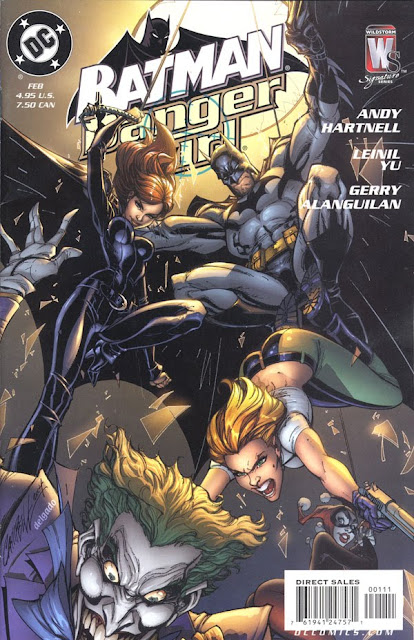
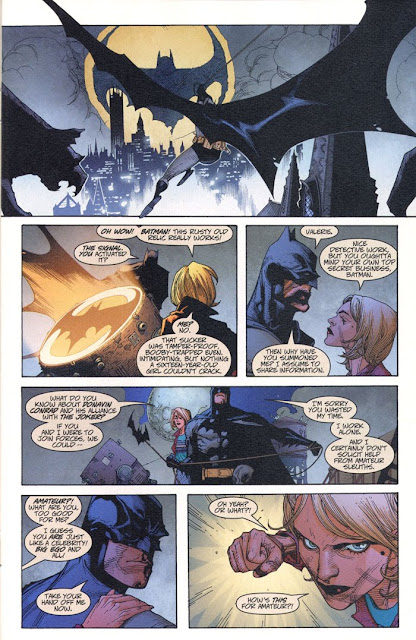
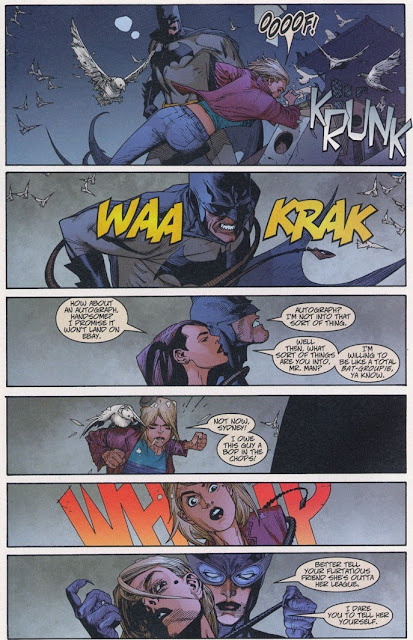
I don't have any of Yu's Marvel work in my collection, but I dug up from my shelves the 2005 Batman/Danger Girl crossover special he collaborated on with inker (and komiks art historian) Gerry Alanguilan:
The superhero artwork by these Filipino artists frequently looks spectacular, but as Budjette Tan noted in a 2003 Comic Book Resources column about the abundance of Filipinos in the American comics industry since the days of Alfredo Alcala and Whilce Portacio, "so few are writing and drawing about who they are and where they are from." The autobiographical comic strips by Bay Area cartoonist Rina Ayuyang are an example of a Filipino creator writing and drawing about the Fil-Am experience for a change.

I first caught some of Rina's underground comics at a Cartoon Art Museum exhibit earlier this year and liked what I saw. Her Whirlwind Wonderland compilation, which she debuted at APE last week, is one of several books I grabbed at the expo.
 Good thing I brought my copy of Whirlwind Wonderland with me while I was at my parents' house. I had my mom translate for me the Ilocano-speaking auntie's dialogue that went untranslated during a strip in which Rina can't understand what her relatives are saying. For instance, "Pagtartarabahuam? Taga ditoy ka kadi? Ilugan nak to man nga agawid no malpas ti pangaldaw?!" means "Where do you work? Are you from here? Can I get a ride so I can go home after we eat?!"
I'm bored with the superhero genre these days (my current favorite superhero comic is an anti-superhero title, Dynamite's The Boys, in which Garth Ennis takes the piss out of supers), but if I ever feel like creating a Fil-Am superhero, instead of an inability to see through lead, I'd make his weakness be an inability to understand his Ilocano-speaking aunties.

However way you observe FAHM, it's the perfect time for me to put the spotlight on comics that were drawn by Filipino talents, whether they're American or non-American. Several Pinoy illustrators have lent their pencils to Marvel and DC titles, such as former Flash artist and Secret Identities contributor Greg LaRocque (who, like many Filipino artists this month, did a wonderful gesture by auctioning off comic art to raise money for typhoon relief) and Secret Invasion artist Leinil Francis Yu.
I don't have any of Yu's Marvel work in my collection, but I dug up from my shelves the 2005 Batman/Danger Girl crossover special he collaborated on with inker (and komiks art historian) Gerry Alanguilan:


The superhero artwork by these Filipino artists frequently looks spectacular, but as Budjette Tan noted in a 2003 Comic Book Resources column about the abundance of Filipinos in the American comics industry since the days of Alfredo Alcala and Whilce Portacio, "so few are writing and drawing about who they are and where they are from." The autobiographical comic strips by Bay Area cartoonist Rina Ayuyang are an example of a Filipino creator writing and drawing about the Fil-Am experience for a change.

I first caught some of Rina's underground comics at a Cartoon Art Museum exhibit earlier this year and liked what I saw. Her Whirlwind Wonderland compilation, which she debuted at APE last week, is one of several books I grabbed at the expo.
 Good thing I brought my copy of Whirlwind Wonderland with me while I was at my parents' house. I had my mom translate for me the Ilocano-speaking auntie's dialogue that went untranslated during a strip in which Rina can't understand what her relatives are saying. For instance, "Pagtartarabahuam? Taga ditoy ka kadi? Ilugan nak to man nga agawid no malpas ti pangaldaw?!" means "Where do you work? Are you from here? Can I get a ride so I can go home after we eat?!"
I'm bored with the superhero genre these days (my current favorite superhero comic is an anti-superhero title, Dynamite's The Boys, in which Garth Ennis takes the piss out of supers), but if I ever feel like creating a Fil-Am superhero, instead of an inability to see through lead, I'd make his weakness be an inability to understand his Ilocano-speaking aunties.
Subscribe to:
Posts (Atom)